Move-Up Buyer Guide To Eagan Single-Family Homes
July 9, 2026
July 9, 2026
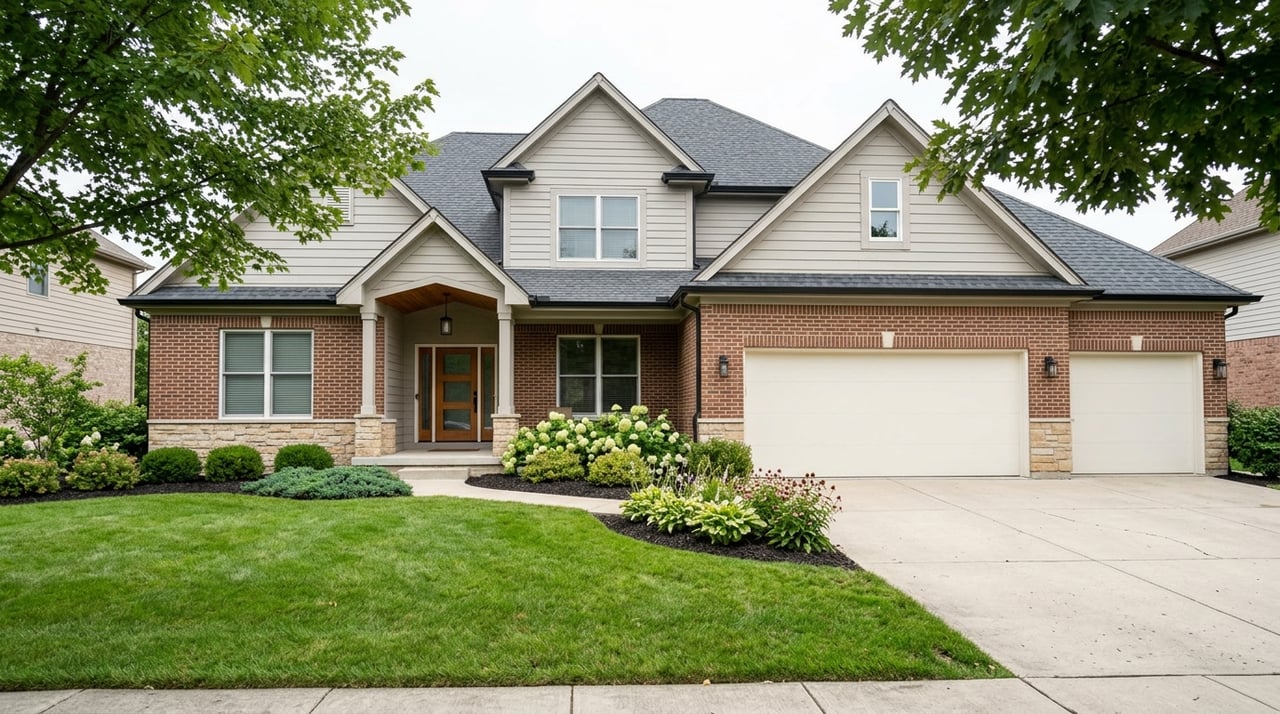
If your current home no longer fits the way you live, Eagan is worth a closer look. For many move-up buyers, the goal is simple: more space, a better layout, a stronger commute setup, or a yard that gives you a little more breathing room. In Eagan, you can still find that next-step single-family home in an established south-metro market with practical access and a wide range of floor plans. Let’s dive in.
Eagan has the kind of housing profile that often appeals to move-up households. According to the city, 52% of the housing stock is single-family detached, with the rest split between townhomes and multifamily housing. That matters because detached homes remain a major part of the local market, even in a city that is largely built out.
The city also reports that only about 2% of residential land remains for future development. In practical terms, that means your options are more likely to come from established neighborhoods, infill opportunities, and redevelopment instead of large waves of brand-new subdivisions.
That established feel is part of Eagan’s appeal. Census QuickFacts shows a 2024 population estimate of 67,240, a median household income of $108,690, and an owner-occupied rate of 67.7%. Those figures support what many buyers already sense on the ground: Eagan is a mature ownership market where many households are buying for long-term fit.
Much of Eagan’s housing was built from the late 1970s through the early 1990s, according to the city’s comprehensive plan. Because of that, move-up buyers will often see familiar suburban layouts rather than one dominant home style. You are likely to run into split-entry homes, split-level and three-level split homes, ramblers, walkout ramblers, four-level homes, and classic two-story homes.
That variety can work in your favor. If you want one-level living plus a finished lower level, a rambler or walkout rambler may fit. If you want more separation between living spaces, a split-level or four-level design may check the box.
Current listing examples in Eagan show this range clearly. Recent examples include a 4-bedroom, 2-bath split-entry at $379,999 with 1,676 square feet on an 8,929-square-foot lot, an updated 4-bedroom, 2-bath rambler at $400,000 with 1,861 square feet on 0.27 acres, and larger upper-tier homes with five bedrooms, four baths, and more than 4,000 square feet.
Move-up buyers are usually looking for function as much as size. In Eagan, common features include:
Local home-trend data also points to features like a den, new roof, storage area, hardwood floors, mature trees, and tile backsplash as value-associated features in Eagan. That is a useful reminder that practical updates can matter just as much as cosmetic ones.
Lot size is often one of the biggest reasons buyers move up, and Eagan offers a useful middle ground. Current examples show lots around 8,929 square feet, 0.27 acres, 0.31 acres, 0.46 acres, and 0.66 acres. While that is not a citywide average, it gives you a realistic feel for what is out there.
In many established neighborhoods, quarter-acre scale lots appear to be a common expectation. Larger wooded or estate-style sites still show up, but they tend to be more selective and often come with a higher price tag.
If yard space is high on your priority list, it helps to be clear early on. In a built-out market like Eagan, bigger lots still exist, but they are usually part of a narrower slice of inventory.
Eagan sits in a competitive but fairly relatable south-metro price band. Over the last three months, the median sale price was $379,773, with homes typically going pending in about 20 days. That pace suggests you should be prepared, but not rushed to the point where careful comparisons become impossible.
A helpful way to think about pricing is by matching your wish list to the most likely band of inventory. Recent examples suggest a range that starts with smaller or older detached homes in the upper $300,000s, moves into more updated or larger homes in the $500,000s, and climbs into the $600,000s, $700,000s, and beyond for larger two-stories, premium lots, and newer construction.
| Price band | What you may find |
|---|---|
| Upper $300,000s to low $400,000s | Older split-entry, rambler, or similar detached homes with 3 to 4 bedrooms |
| $500,000s | Larger or more updated homes, often with stronger layouts, finished lower levels, or bigger lots |
| $600,000s to $700,000s | Bigger two-story homes, more premium sites, and homes with higher-end updates |
| $1 million and up | New construction or upper-tier homes with larger footprints and more custom features |
This range is useful because it keeps expectations grounded. In Eagan, the jump from a solid move-up home to a significantly larger or newer-feeling home can be substantial.
If you are deciding whether to stay in Eagan or look at nearby suburbs, pricing alone may not make the decision for you. Over the last three months, median sale prices were very close across Eagan, Apple Valley, Inver Grove Heights, Bloomington, and Burnsville. The gap between them was modest.
That means your real decision may come down to things like home condition, lot size, floor plan, and commute fit. In other words, Eagan is not wildly out of step with nearby options. It sits in the same broad south-metro pricing conversation.
Market pace is also similar. Eagan homes have been selling in about 20 days, which is comparable to Apple Valley and Burnsville, slightly slower than Bloomington, and faster than Inver Grove Heights.
For many move-up buyers, location only works if the day-to-day drive works too. Eagan’s mean travel time to work is 21.2 minutes, according to Census QuickFacts. That puts it close to other nearby south-metro suburbs and supports its reputation as a practical commuter location.
The city identifies I-35E, I-494, Cedar Avenue or Highway 77, and State Highways 13, 149, and 55 as key routes in and around Eagan. For many households, that road network supports access to the airport area, Bloomington, downtown Minneapolis, and downtown St. Paul, depending on your destination and traffic patterns.
Transit is not the main story here, but it is still part of the picture. Metro Transit’s Cedar Grove Station connects to routes serving Apple Valley, Burnsville, downtown Minneapolis, the University of Minnesota, Prior Lake, and Shakopee. If one person in your household drives and another wants occasional transit access, that flexibility can help.
A move-up decision is not just about square footage. It is also about how a home supports your day-to-day routine. Eagan says it has 60 parks, more than 1,370 acres of play space, and 161 miles of trails.
That kind of outdoor network can matter if you want easier access to recreation without giving up suburban space. For buyers moving out of a smaller home, condo, or tighter lot, Eagan offers a practical combination of larger residential settings and strong park and trail access.
Because much of Eagan’s housing stock dates from the late 1970s through the early 1990s, condition matters. Two homes with similar bedroom counts can feel very different in value once you compare kitchens, baths, windows, roof age, lower-level finish, and overall maintenance.
It also helps to remember that Eagan is considered a very competitive market. With homes often going pending in about 20 days, preparation still matters. If you are buying and selling at the same time, having a clear strategy can make the transition much smoother.
For households looking for multigenerational flexibility, Eagan does allow registered accessory dwelling units in R-1 or Estate zoning when the unit is attached to or within the primary residence and owner-occupancy and lot-coverage rules are met. That will not apply to every buyer, but it is worth knowing if your housing needs are changing.
If Eagan is on your shortlist, a focused plan usually works better than a broad one. Start by narrowing your must-haves before you start chasing every new listing.
A practical checklist includes:
In a market with established homes and limited future development, the best move-up opportunities are often the homes that match your daily life, not just the homes with the biggest headline features.
If you are weighing a move within the south metro, Eagan offers a strong mix of detached housing, familiar neighborhood patterns, realistic commute access, and enough price range to serve more than one stage of the move-up journey. And when you have an experienced local advisor helping you compare layout, condition, pricing, and timing, the decision usually becomes a lot clearer.
If you are thinking about your next move in Eagan or anywhere across the Twin Cities south metro, Kary marpe offers direct, experienced guidance to help you buy with confidence and plan the move well.
Stay up to date on the latest real estate trends.
I am always here for personal service by phone or email, so feel free to contact me any time!