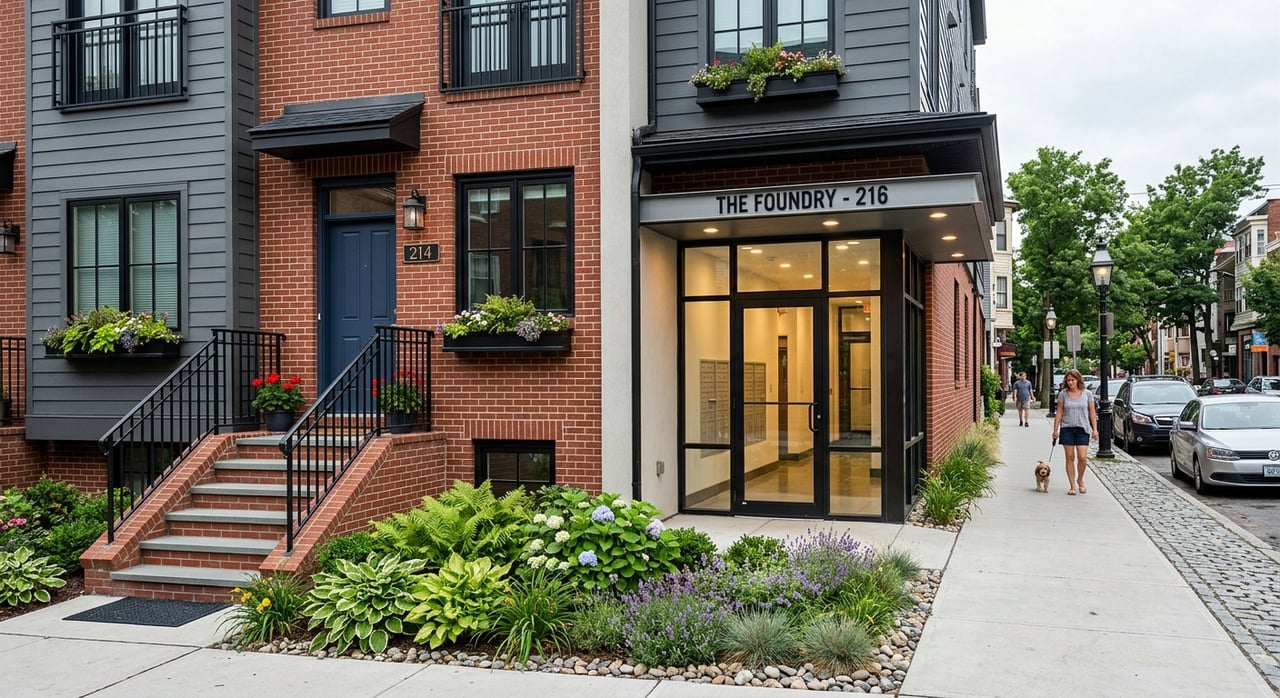
Minneapolis Condo vs Townhome: How to Choose Well
July 16, 2026
July 16, 2026
Wondering whether a condo or a townhome makes more sense in Minneapolis? You are not alone. Many buyers start with the style of the home, but in Minneapolis, the better choice often comes down to ownership structure, monthly costs, parking, and how much day-to-day maintenance you want to handle. This guide will help you compare the two clearly, so you can move forward with confidence. Let’s dive in.
In Minnesota, the difference between a condo and a townhome is not always just about how the property looks from the street. The legal documents behind the property often matter more than the label on the listing.
A condominium is generally part of a common interest community where you own your unit and share ownership of common elements with other owners. A townhome usually has a more house-like physical form, often with each unit extending from foundation to roof and open space on at least two sides. Even so, many townhomes are also governed by HOA or common interest community documents, which means the declaration is a key part of the decision.
The declaration is the document that explains what you own, what the association owns or maintains, and which rules apply. It can also spell out financial responsibilities, restrictions, and how shared spaces are handled.
That means two properties that look similar on paper can feel very different once you review the documents. One may offer a simple, low-maintenance setup, while another may come with more owner responsibility than you expected.
For many buyers, this is where the condo versus townhome decision becomes clearer. If you want less exterior responsibility, a condo may feel easier. If you want a more house-like setup with fewer shared interior spaces, a townhome may be the better fit.
Under Minnesota law, the association generally maintains the common elements unless the declaration says otherwise, while each owner maintains the unit. The association is also required to have a written preventative maintenance plan, maintenance schedule, and maintenance budget for common elements.
Monthly dues can vary a lot depending on the property. In current Minneapolis listings, some condo fees cover items such as gas, water, internet, cable, trash, and parking-related amenities. Some townhome HOA fees cover lawn care, snow removal, exterior maintenance, and hazard insurance.
This is why it is important to look beyond the monthly number alone. A higher fee is not always worse if it covers major ongoing costs that you would otherwise pay separately.
Associations collect regular assessments for operations and long-term maintenance. When reserves are not enough for major repairs or emergencies, special assessments can be used.
Before you buy, it is smart to ask whether there is a reserve study, what major projects may be coming up, and whether the budget appears to support future repairs. A lower monthly fee can look attractive at first, but it may not tell the full story.
The right choice often depends on how you want to live every day. Minneapolis offers both condos and townhomes, but they tend to serve different priorities.
Condos often appeal to buyers who want strong access to building amenities, shared features, and minimal exterior upkeep. Townhomes often appeal to buyers who want a more private, house-like layout, garage access, and fewer shared spaces.
As of early July 2026, Minneapolis has 616 condos for sale citywide with a median listing price of $250,000. Condo inventory is concentrated in walkable central neighborhoods, which makes this property type especially relevant if you want to be close to shops, restaurants, offices, or entertainment.
Neighborhood snapshots help show the range. Loring Park has 46 condos for sale at a median listing price of $172,000 and a Walk Score of 91. North Loop has 14 condos at a median listing price of $409,000 and a Walk Score of 84, while Downtown East has 41 condos at a median listing price of $805,000 and a Walk Score of 91.
Minneapolis currently has 175 townhouses for sale with a median listing price of $317,000. Townhomes appear in both central and edge neighborhoods, but the product mix often feels different from condos.
Current examples include 2 townhouses in Prospect Park-East River Road at a median listing price of $500,000 and 5 townhouses in Central Minneapolis at a median listing price of $550,000. There are also premium urban townhomes that sit much higher, including a North Loop example listed at $1.395 million.
In Minneapolis, parking can have a real impact on your daily routine. This is especially true if you are comparing a central condo building to a townhome with an attached or dedicated garage.
Condo listings often highlight assigned or heated parking stalls and shared building amenities. Townhome listings more often emphasize garage access, fewer shared spaces, and exterior maintenance handled by the association.
Do not assume parking works the same way from one property to the next. Some buyers are happy with one assigned stall, while others need garage space, guest parking, or room for more than one vehicle.
City rules matter too. Minneapolis says vehicles on private property must be parked in a garage or on a hard-surfaced driveway, and no more than two vehicles per dwelling unit may be parked outdoors. If parking flexibility matters to you, ask detailed questions early.
Price is important, but broad labels can be misleading. Townhomes are currently slightly more expensive than condos on the citywide median list price, but both categories cover a wide range.
Condo inventory is larger and the citywide median list price is lower. Townhomes have fewer listings, a higher median list price, and a shorter median time on market. That does not mean condos are always budget options or that townhomes are always the better long-term value.
Here is a practical look at current price bands in Minneapolis:
| Property Type or Area | Current Median Listing Price |
|---|---|
| Minneapolis condos, citywide | $250,000 |
| Loring Park condos | $172,000 |
| North Loop condos | $409,000 |
| Downtown East condos | $805,000 |
| Minneapolis townhomes, citywide | $317,000 |
| Prospect Park-East River Road townhomes | $500,000 |
| Central Minneapolis townhomes | $550,000 |
The takeaway is simple. You should compare specific properties, dues, and ownership details rather than assuming one category is always the cheaper or better option.
Association rules can shape your ownership experience more than many buyers expect. These rules often address parking, rentals, pets, landscaping, exterior decorations, quiet hours, and approval for changes.
You also have the right to review governing documents and most association records, along with an annual financial and insurance report. Reading those materials before you buy can help you avoid surprises later.
Use these questions when comparing a condo and a townhome in Minneapolis:
These answers can tell you more than the listing headline ever will.
If you want the strongest access to shared amenities and the least exterior responsibility, a condo may be the better fit. If you want a more house-like layout, garage-focused living, and usually fewer shared spaces, a townhome may make more sense.
In Minneapolis, the right answer depends on your budget, your preferred neighborhood, your parking needs, and the association documents tied to the property. That is where local guidance can make the process much easier.
If you are weighing condos and townhomes in Minneapolis and want practical, neighborhood-level advice, Kary marpe can help you compare the real tradeoffs and find the right fit for how you want to live.
Stay up to date on the latest real estate trends.





I am always here for personal service by phone or email, so feel free to contact me any time!